Count on it
Lancet gauge chart: which twist lancet hurts least?
Lancet gauge is a backwards number: the higher it goes, the thinner the point. Here is how EasyTouch twist lancets and safety lancets compare, and the small changes that make fingertip testing more comfortable.
How lancet gauge works
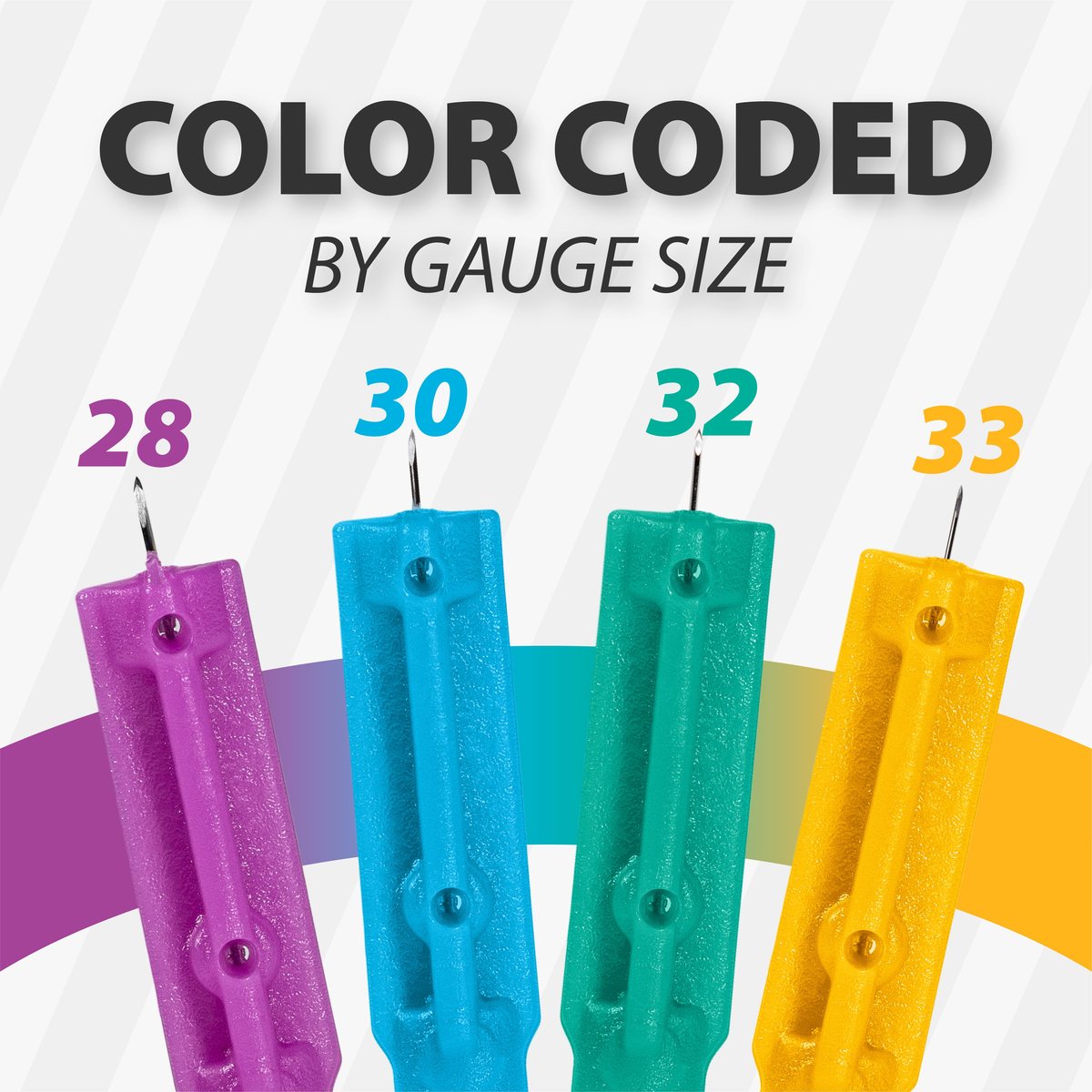
Gauge describes the diameter of the needle. A 28 gauge lancet is thicker than a 33 gauge lancet, so it opens a slightly larger puncture and blood comes up faster; a 33 gauge lancet is finer and most people feel it less. EasyTouch twist lancets come in four gauges and the box for each carries its own color, so you can tell them apart in a drawer:
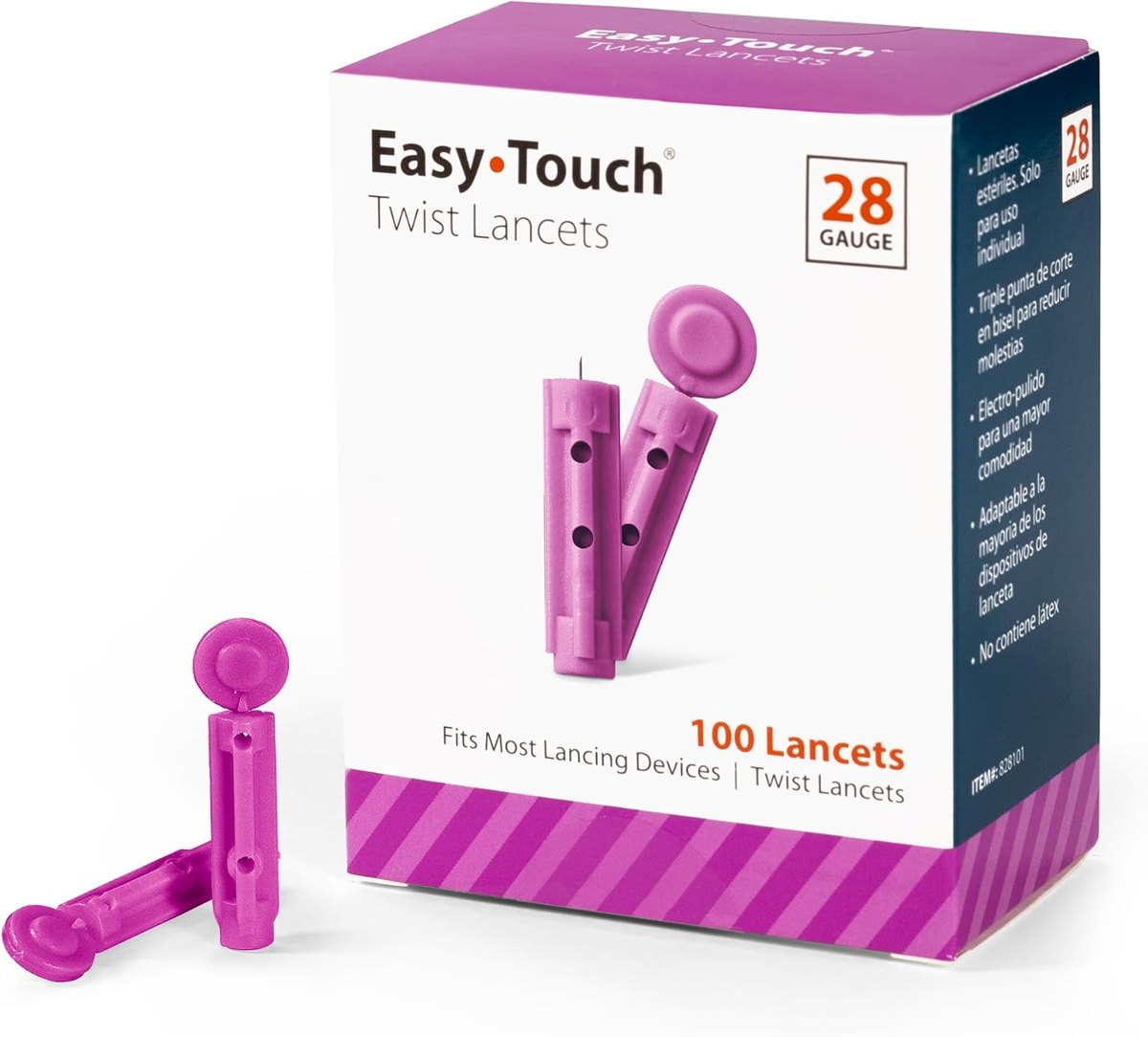
- 28G: the sturdiest twist lancet, for calloused or cold fingers and meters that need a bigger drop
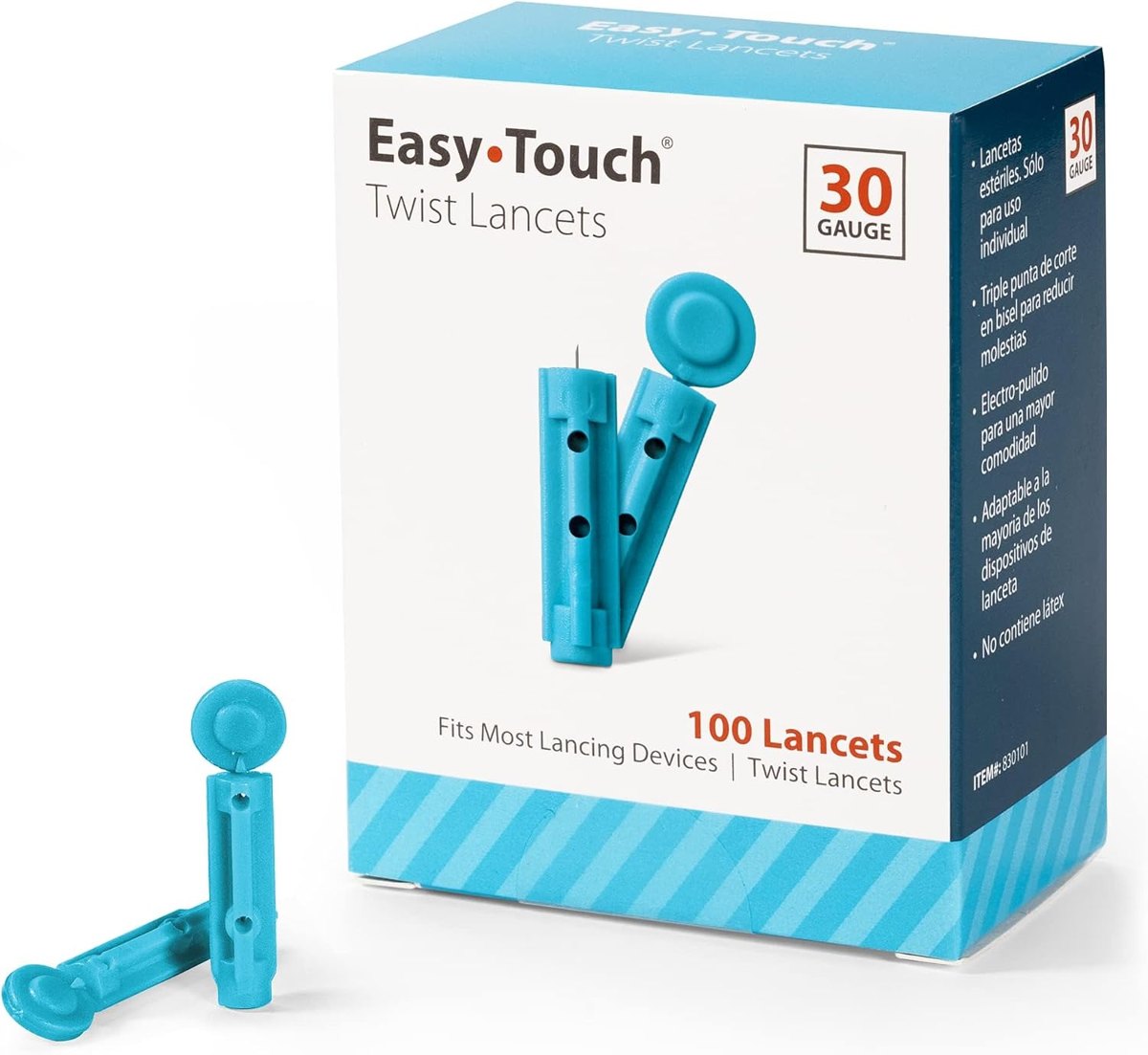
- 30G: the everyday balance of comfort and blood flow, also sold in 300-count and eight-box packs
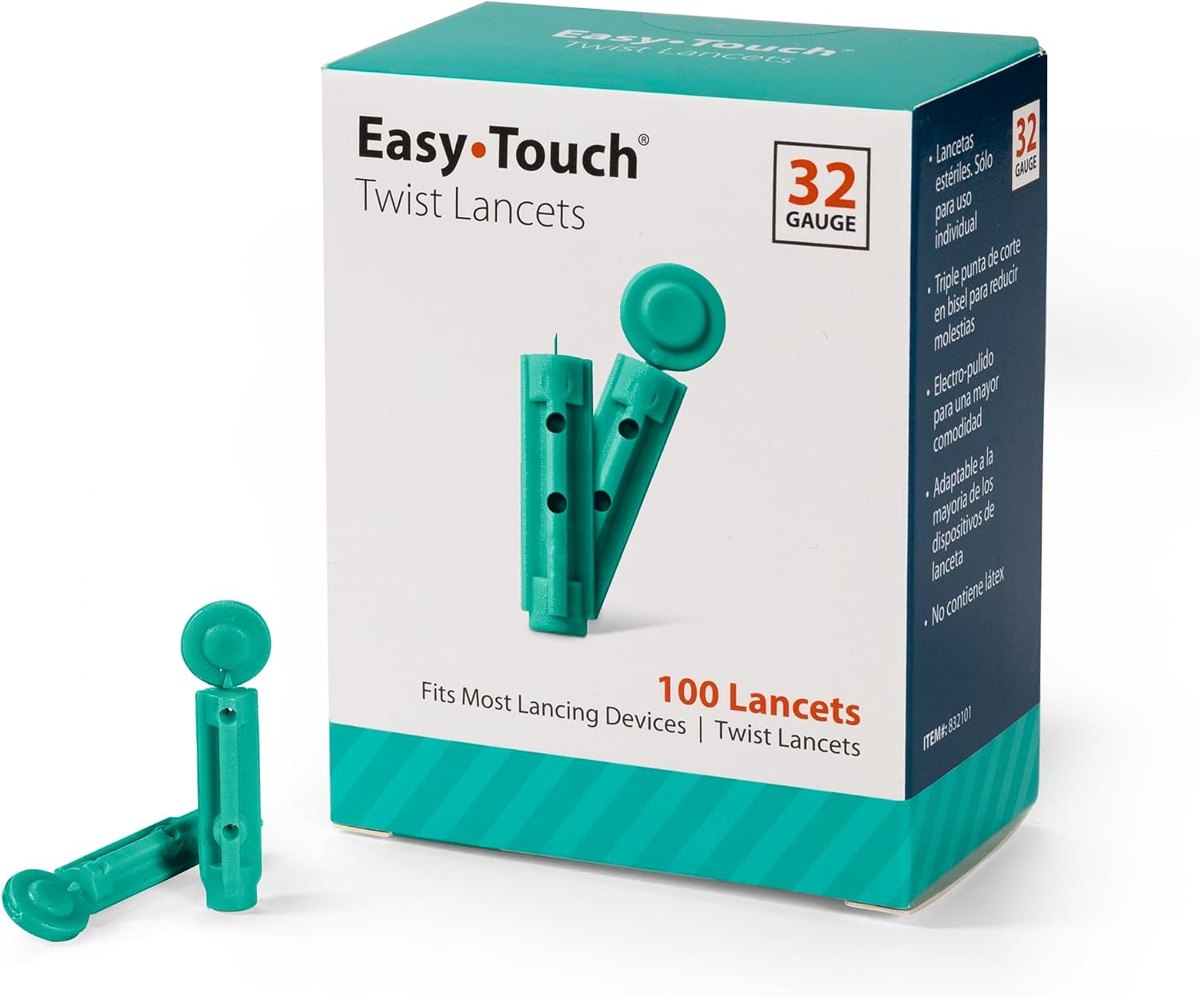
- 32G: finer, for sensitive fingertips
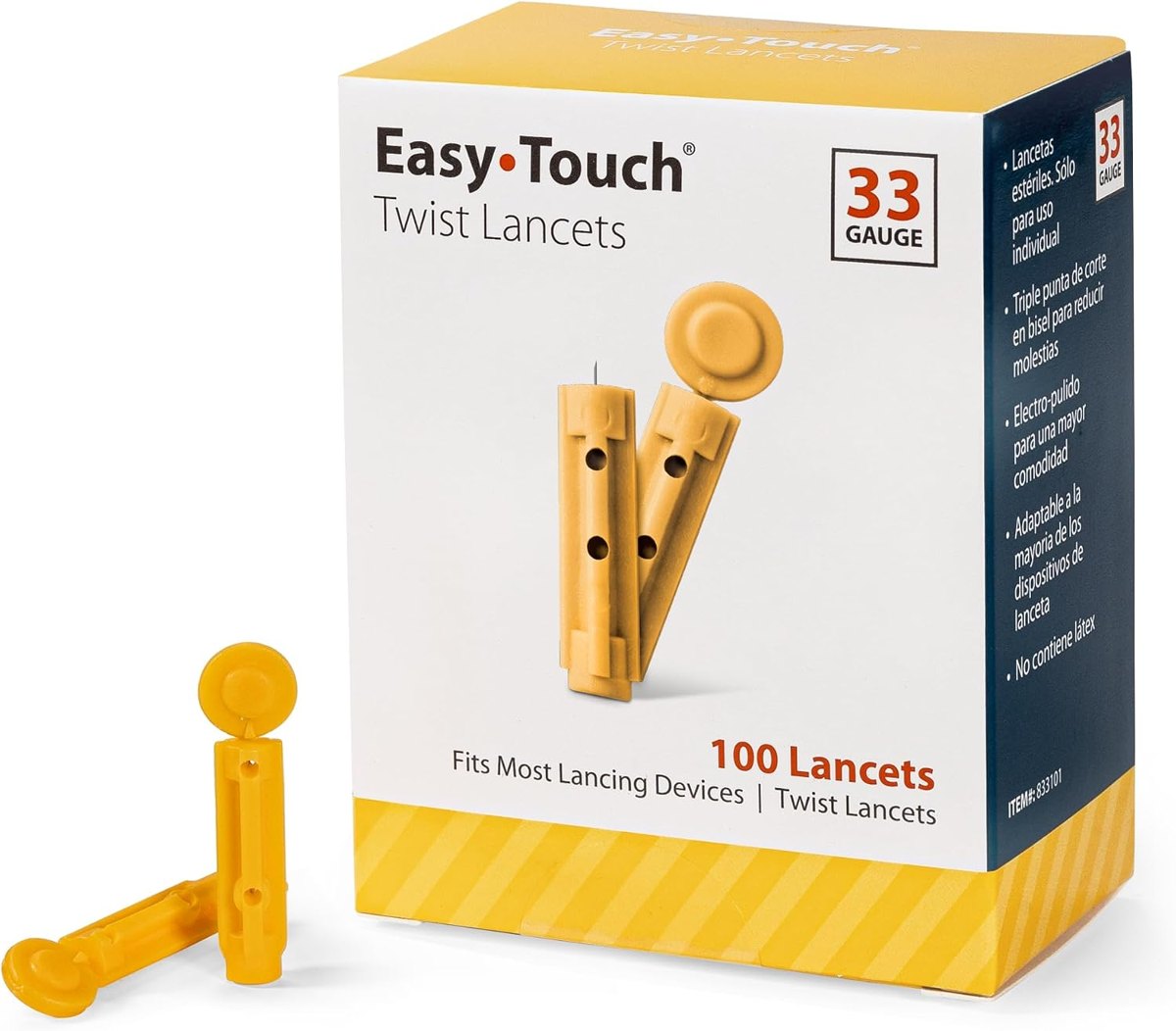
- 33G: the thinnest, often chosen for children and people who test many times a day
Which lancet is the least painful?
For most people the thinnest lancet, 33G, is the least painful, but gauge is only part of the story. The triple-bevel cut on every EasyTouch lancet matters as much: three ground faces meet at a sharp point that slices the skin cleanly instead of pushing through it, which is why a fresh lancet feels virtually painless and a reused one does not.
If a thin lancet does not give enough blood, you will squeeze the finger, and squeezing hurts more than a slightly thicker lancet would have. The best gauge is the finest one that gives you a drop without milking the finger.
Depth beats gauge
Your lancing device has a depth dial for a reason. Start at the shallowest setting and turn it up one step at a time until you get a usable drop. Thin skin on a child needs a shallow setting; calluses from years of testing need a deeper one. The EasyTouch lancing device also uses vibration control to soften the snap.
- Warm your hands under running water and let your arm hang down for a few seconds
- Prick the side of the fingertip, not the pad you type with
- Rotate fingers and sides so no single spot gets sore
- Use a fresh lancet every time: a used tip is dull and no longer sterile
Twist lancets or safety lancets?
Twist lancets need a lancing device and are the low-cost choice when you test yourself. Pressure-activated safety lancets are self-contained: press against the site, the lancet fires once, and the needle locks behind its shield. They suit caregivers testing someone else, shared care settings and hands that find it hard to load a device. EasyTouch safety lancets come in 23G for a larger sample, 26G, 28G and 30G.
Disposing of used lancets
Even a tiny lancet is a sharp. Drop used lancets into a sharps container; the EasyTouch lancing device has an ejector so your fingers never touch the point.
EasyTouch twist lancets at a glance
- 28G, magenta box: 100 count; the sturdiest EasyTouch twist lancet
- 30G, blue box: 100 count, 300 count and a pack of eight boxes
- 32G, teal box: 100 count; fine and comfortable
- 33G, yellow box: 100 count; the finest EasyTouch twist lancet
Every EasyTouch twist lancet is sterile, single use and designed with a universal fit for most lancing devices. The color coded package and cap make the gauge easy to see, and the 30g is the original everyday size most testers keep in stock.
Matching lancets to your test strips
Your lancet only has to make a drop big enough for your test strips. EasyTouch, HealthPro and BluLink glucose strips need a tiny sample, so most people can use a finer gauge than they expect. If a strip shows an error for too little blood, warm your hands, go one depth setting deeper, or step one gauge thicker before you squeeze.
Common questions about twist lancets
Can you reuse a lancet? No: the tip dulls after one use, sampling becomes more painful and the lancet is no longer sterile. Do twist lancets fit other brands of device? EasyTouch twist lancets fit most standard lancing devices. Are they latex free? Check the box label for the materials information if you have an allergy.
This guide explains products and general practice. It is not medical or veterinary advice.