Count on it
U-40 vs U-100 insulin syringes for dogs and cats
The most important rule of pet insulin syringes fits in one line: the syringe must match the insulin. Here is why, and how to choose the barrel size and needle within each family.
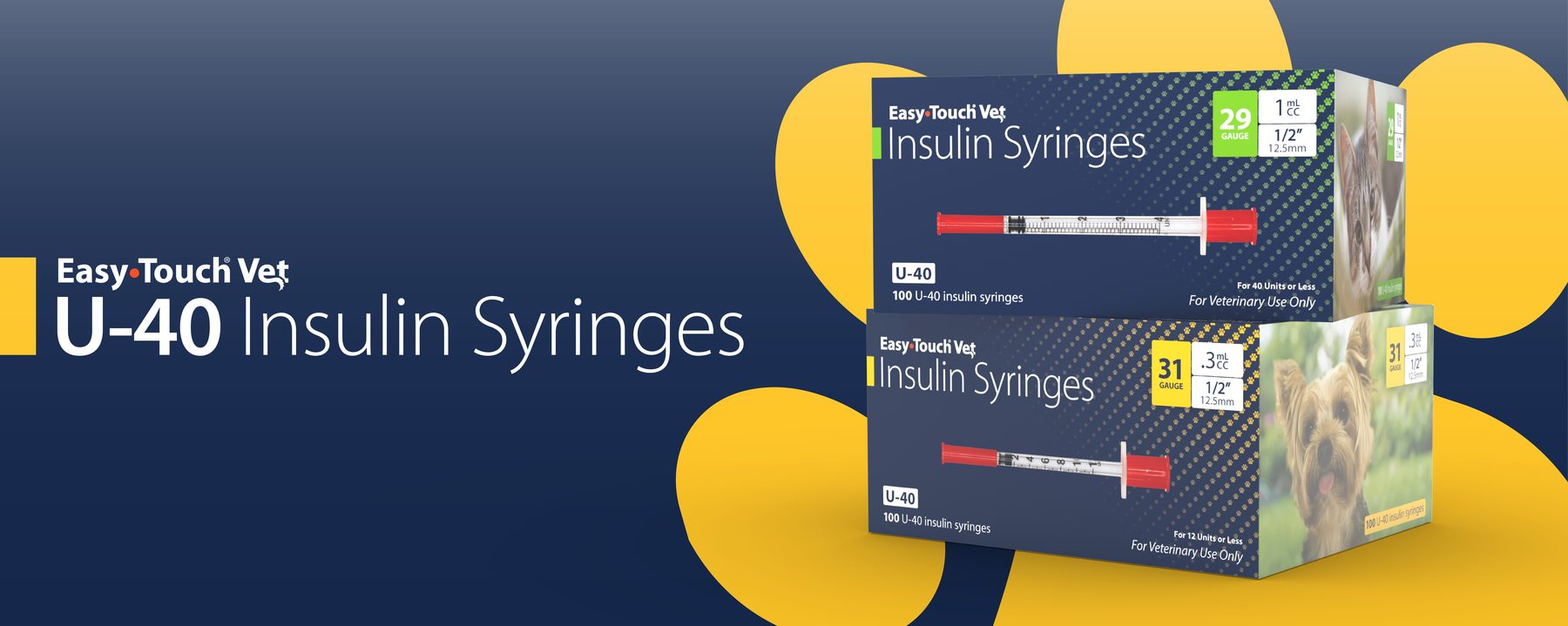
What U-40 and U-100 mean
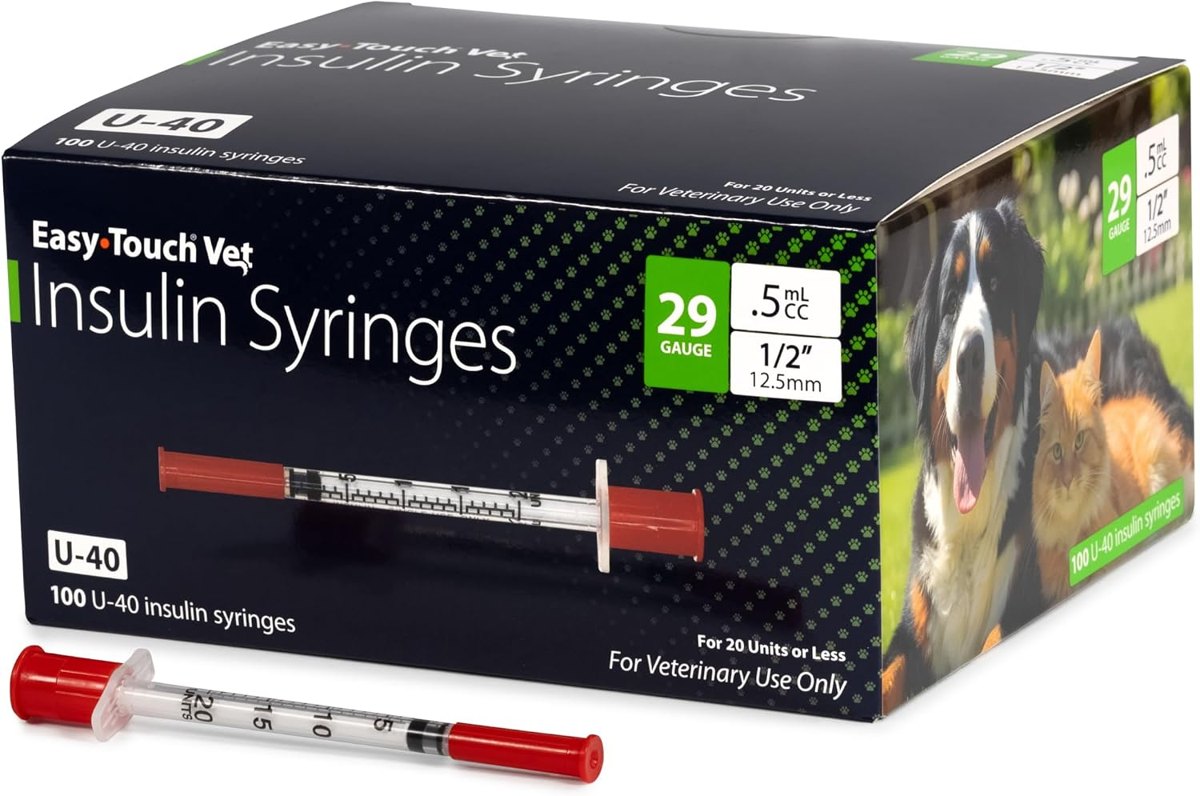
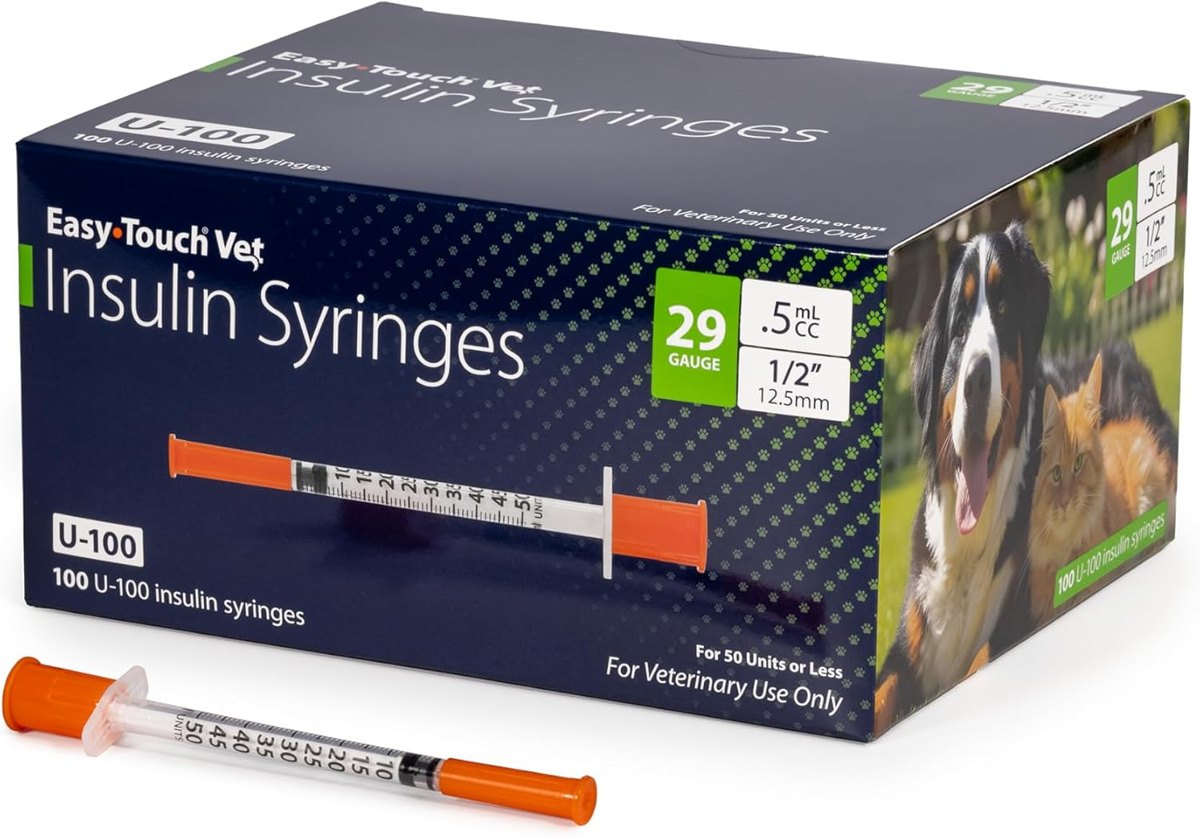
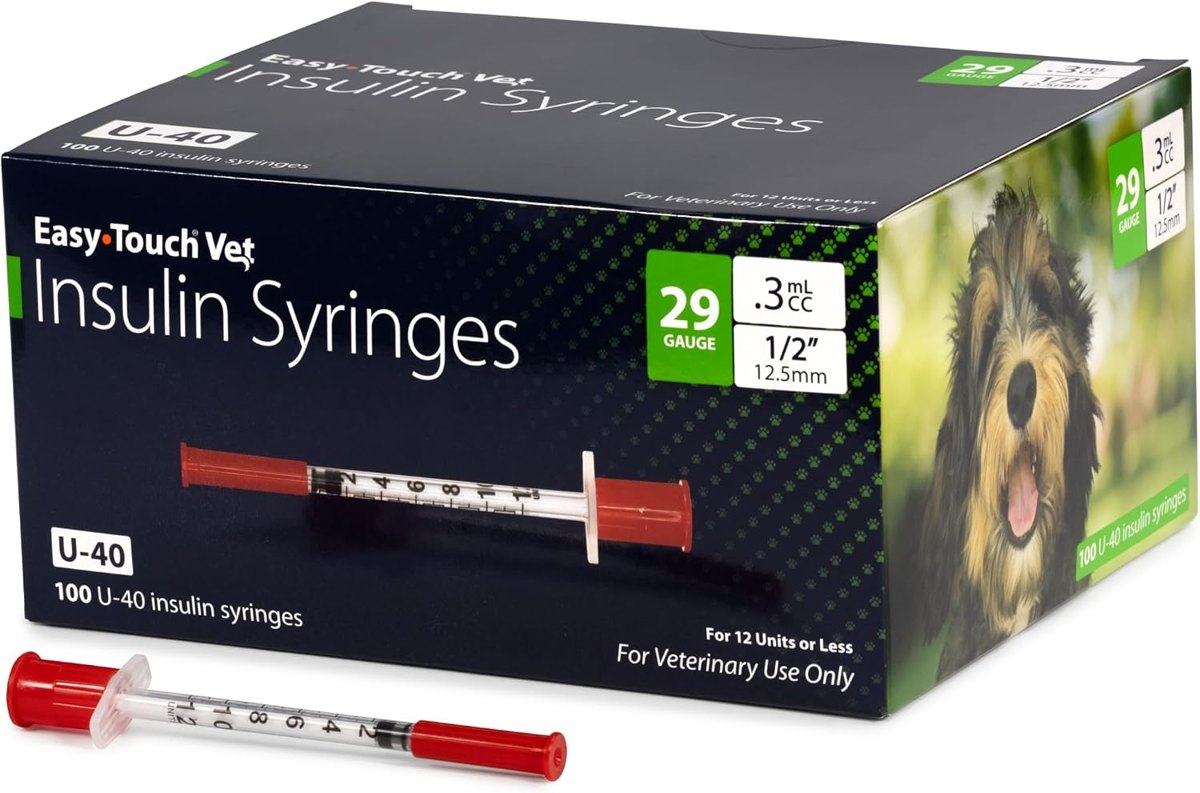
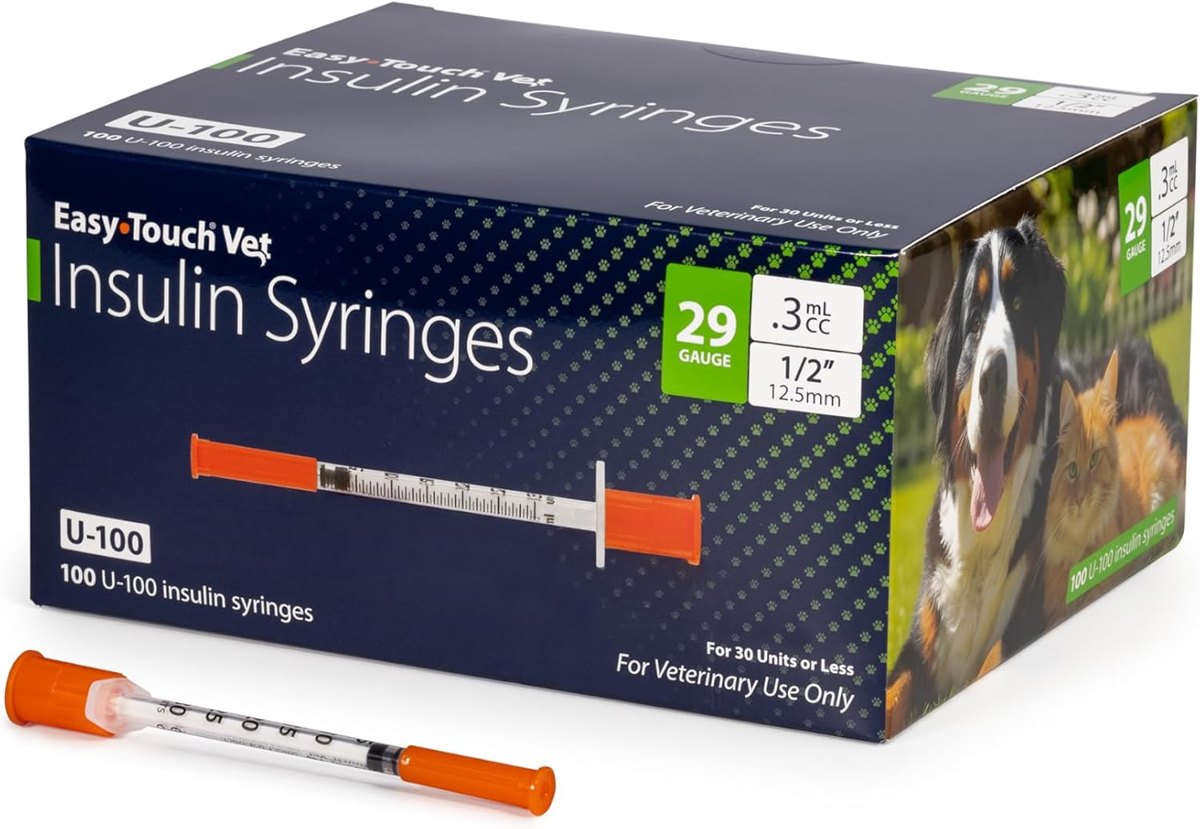
Insulin concentration is measured in units per milliliter. U-40 insulin contains 40 units in each mL; U-100 insulin contains 100. Several veterinary insulins are U-40, while human insulins used for pets are usually U-100. Insulin syringes are printed in units, not milliliters, and the scale is drawn for one concentration. Fill a U-100 syringe with U-40 insulin to the 10-unit line and your pet gets only 4 units; the reverse gives two and a half times the dose.
Always read the concentration on the vial, then use the matching EasyTouch Vet syringe family. Your veterinarian will confirm which insulin and syringe your pet needs.
Choosing the barrel size
Pick the smallest barrel that holds the full dose. The units on a small barrel are spaced further apart, which makes half units easier to see.
- U-40: 0.3 mL holds up to 12 units, 0.5 mL up to 20, 1.0 mL up to 40
- U-100: 0.3 mL holds up to 30 units, 0.5 mL up to 50, 1.0 mL up to 100
Every EasyTouch Vet syringe is marked in half units, which matters for cats and small dogs whose doses change in half-unit steps.
Choosing the needle
EasyTouch Vet syringes all use a half-inch needle, the usual length for an injection under the loose skin of the scruff. The U-40 family uses 29 gauge. The U-100 family offers 28 gauge for a firmer needle that bends less in thick skin, 29 gauge as the everyday choice, and 30 gauge as the finest. Each needle is micro-polished and silicone-coated to reduce drag.
A calm injection routine
- Roll, do not shake, insulin suspensions unless the label says otherwise
- Draw the dose at eye level and tap out bubbles
- Tent the skin, insert at a confident angle, and push the plunger steadily
- Give a treat or a meal as your vet directs, and log the time
- Use a new syringe every time; never reuse
Disposing of pet syringes
Drop used syringes needle-first into a sharps container straight after the injection. EasyTouch personal containers hold ten syringes and fit a bag for trips to the groomer or a sitter's house; follow local rules for disposing of full containers.
Syringe and needle sizes explained
Insulin syringes are described by three numbers. The barrel size, in mL or cc, sets how many units fit: 0.3 mL, 0.5 mL or 1.0 mL. The needle gauge sets the thickness: higher numbers are thinner needles, so 30 gauge is finer than 28. The needle length, in inches, sets how deep it goes: EasyTouch Vet syringes use a 1/2 inch needle, a common length for injections under the skin rather than into muscle.
Thinner needles can feel more comfortable, but very thick insulin suspensions flow more easily through a slightly larger bore. Which size is right depends on your pet, the insulin and the dose, so ask your veterinarian; for people with diabetes, the same question goes to your doctor.
Markings matter as much as size. Bold half-unit measurements on a short barrel make a small insulin dose easier to read, and a clear barrel shows air bubbles before injections. Always check the date on the box, store syringes dry, and never share syringes between pets.
Needle sizes, comfort and the injection
Common needle sizes for insulin syringes run from 28 to 31 gauge and from 5/16 inch to 1/2 inch. However, the right needle depends on the body: a short, thinner needle is less painful for most people, while a standard half-inch needle is the proper length for the loose skin of a dog or cat. Specifically for pets, avoid injecting into muscle; tent the skin and inject into the fold. Pets that require larger doses may need a bigger barrel, but not a longer needle.
Keep the syringe supply dated and dry, check the insulin dosage against your vet's written instructions before injecting insulin, and record each insulin dose. Your doctor or veterinarian can adjust the dosage based on blood glucose readings; never change it on your own.
People and pets: the same principle
Human insulin syringes for people with diabetes are almost always U-100, matched to U-100 insulin to manage blood sugar. Pet insulin may be U-40 or U-100, and that is the one difference that matters most. The rule is the same in both cases: syringe concentration equals insulin concentration, every time.
This guide explains products and general practice. It is not medical or veterinary advice.